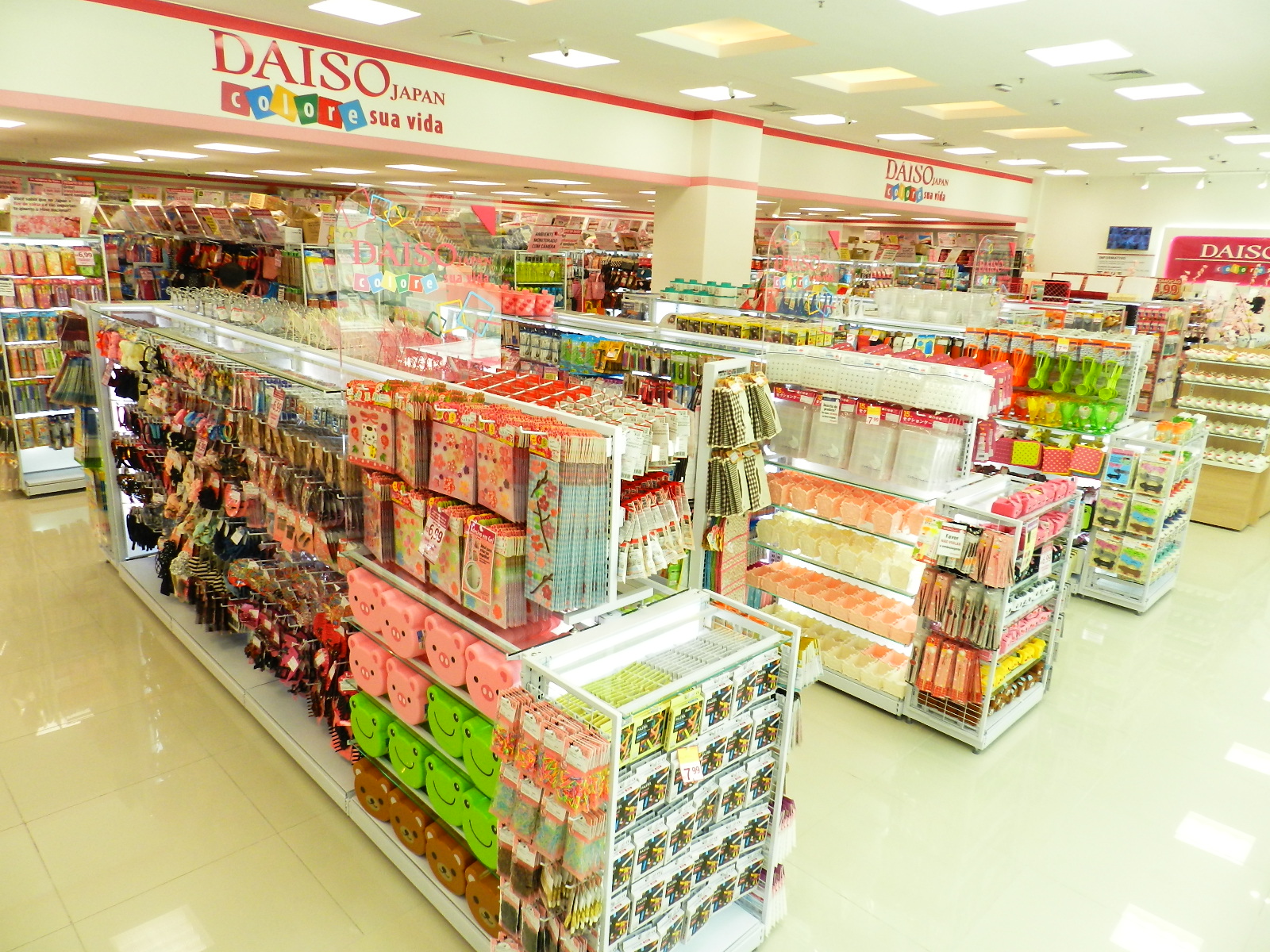
There once was a Japanese retailer selling unusual, colorful and quality goods at low prices. In 2012, the company arrived in Brazil with a store in downtown São Paulo from which it built a chain of 11 stores and a partnership to feature units inside supermarkets. More than this Daiso breathed life into the concept of fixed-price stores.
Instead of R$ 1.99, the products start at R$ 6.99 (50% of the mix is sold at R$ 7.99) showing that creativity is priceless. With three stores unveiled in 2016 and e-commerce on its way, the company has been gaining ground in the Greater São Paulo, cautiously and, above all, taking pains to get it right at every new venue opened.
Daiso came to Parque Shopping Barueri, a General Shopping development in Barueri (state of São Paulo), in 2015. “We look for deals that favor the company’s expansion and make sense for our logistics. Parque Shopping Barueri fits the profile. We negotiated with management and have enjoyed great acceptance from the public,” says Reginaldo Paulista Gonçalves, the company’s general manager. “Venue selection is paramount for our success. The development attracts shoppers from Barueri, Osasco, Alphaville, Carapicuíba and Jandira, which means reaching a broad public,” the executive adds.
During a difficult economy, Daiso has been reinforcing its publicity actions to show the public that creative gifts are not necessarily expensive. “We try to offer the widest range of goods possible, with constant novelties, reasonable price, careful service, respect toward the public, and attention to detail,” he says.
With this attitude, the Parque Shopping Barueri store, on the mall’s L1 level, gets close to 15 thousand walk-ins per month, looking for stationery, household utensils, gifts, gardening tools, beauty products and pet items, among other choices, all imported, unusual and creative. “We have come to stay, to become a part of the lives of the Brazilian people, to make their everyday lives easier and introduce products that they didn’t even know they needed,” Gonçalves concludes.
A little history
Daiso, one of the world’s largest fixed-price store chains, was founded in Japan in 1972 by Hirotake Yano, who was previously a street vendor and started out selling merchandise at 100 Yen (about R$ 3.50). Daiso currently has 4,200 stores in 28 countries, operating under a franchise system and focused on selling goods at a fixed price, at a total of over 70 thousand items.
With factories in Japan, Thailand and China, among other countries, the articles are purchased by Daiso stores at a sort of online auction. Approved orders take almost three months getting to Brazil, and so one of the chain’s biggest investments has been in logistics. Currently, around 500 products are replenished regularly and the rest have no assured continuity, which gives shoppers a sense of a “treasure hunt” with every visit to the store.